
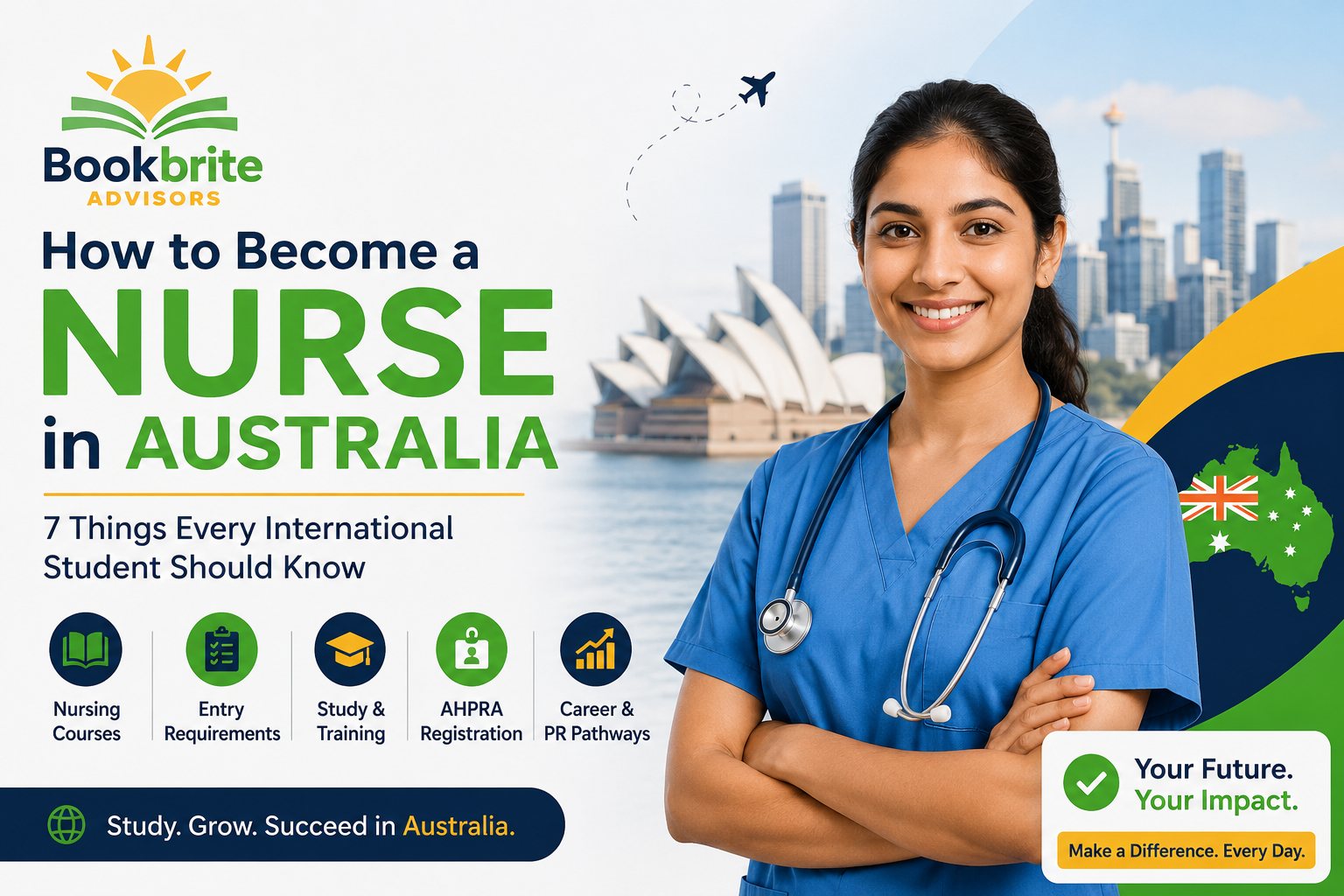
How to Become a Nurse in Australia: 7 Things Every International Student Should Know
Do you know how much a nurse can earn working a weekend shift in Australia?
Imagine finishing a Saturday shift at an Australian hospital and earning significantly more than a standard weekday rate thanks to weekend penalties and allowances. For many nurses in Australia, weekend, evening, and public holiday shifts can substantially increase their annual income.
Now imagine something else.
A few years from today, you're wearing your nursing uniform, caring for patients in a modern Australian hospital, earning a professional salary, gaining valuable healthcare experience, and building a future in one of the world's most respected healthcare systems.
This isn't simply a dream for thousands of international students—it is a realistic career pathway.
Australia continues to face a growing demand for qualified nurses across hospitals, aged care facilities, community health services, and regional healthcare centres. As a result, nursing remains one of the most sought-after courses for international students because it offers strong job prospects, competitive salaries, practical training, and potential pathways to permanent residency.
However, becoming a nurse in Australia requires more than just enrolling in a course. You need to understand the right qualification, English language requirements, registration with AHPRA, student visa requirements, and the career opportunities available after graduation.
If you're considering studying nursing in Australia, here are the 7 most important things you should know before applying.
1. Australia Has a Strong Demand for Nurses
Australia's ageing population and growing healthcare sector have created an ongoing demand for qualified nurses across hospitals, aged care facilities, community health services, and regional healthcare centres.
This demand creates excellent opportunities for international students because:
- Nursing graduates are highly employable.
- Healthcare employers actively recruit qualified nurses.
- Career opportunities exist across metropolitan and regional Australia.
- Nursing remains one of Australia's most respected professions.
For students seeking job security and long-term career growth, nursing remains one of the strongest study options available.
2. Choosing the Right Nursing Course Is Crucial
Not all nursing qualifications lead to the same career outcomes.
Diploma of Nursing
Duration: 18–24 months
Graduates typically become Enrolled Nurses (ENs) and work under the supervision of Registered Nurses.
Bachelor of Nursing
Duration: 3 years
The most popular pathway for international students. Graduates become eligible to apply for registration as a Registered Nurse (RN).
Master of Nursing
Duration: Approximately 2 years
Suitable for students who already hold a bachelor's degree in another field and want to transition into nursing.
Before accepting any offer, always confirm that the course is accredited by AHPRA and recognised by the Nursing and Midwifery Board of Australia (NMBA).
3. What Are the Entry Requirements for Nursing in Australia?
If you're planning to study nursing in Australia, understanding the admission requirements is an important first step. While specific criteria may vary between universities, most institutions have similar academic and English language requirements for international students.
Academic Requirements
To apply for a nursing course in Australia, you will generally need to:
- Successfully complete senior secondary education (Year 12 or equivalent)
- Meet the university's minimum academic entry requirements
- Have studied subjects such as Biology, Chemistry, or Health Sciences (recommended but not always mandatory)
Many universities offering a Bachelor of Nursing typically look for academic results equivalent to around 60% or higher, although requirements may differ depending on the institution.
English Language Requirements
Strong English communication skills are essential for nurses, as they work closely with patients, families, and healthcare professionals in a clinical environment.
For this reason, nursing programs often have higher English language requirements than many other study areas. The standards are guided by the Nursing and Midwifery Board of Australia (NMBA) and are important for both university admission and professional registration.
Accepted English language tests include:
- IELTS Academic
- PTE Academic
- Occupational English Test (OET)
- TOEFL iBT
You usually need an overall score of 7.0, with at least 7.0 in listening, reading, and speaking, and at least 6.5 in writing.Equivalent scores in PTE Academic, OET, and TOEFL iBT may also be accepted, depending on the university and registration requirements.
The good news is that many international students successfully achieve these scores each year through consistent preparation and practice. Starting your English language preparation early can help expand your university options and make the application process smoother.
Additional Requirements for Clinical Placements
Before commencing clinical placements or hospital training, students may also need to provide:
- Police clearance certificates
- Working with Children Check (where required)
- Evidence of up-to-date vaccinations and immunisations
- Other health and compliance documents required by placement providers
Your university will provide guidance on these requirements before you begin your practical training.
By understanding the nursing entry requirements in Australia early, international students can prepare confidently and improve their chances of securing admission into their preferred nursing program.
4. Your University Choice Can Impact Your Future Opportunities
Australia offers excellent nursing programs across both metropolitan and regional locations.
Popular nursing universities include:
- University of Sydney
- Monash University
- Deakin University
- Queensland University of Technology (QUT)
- University of Melbourne
- La Trobe University
- Curtin University
Regional universities such as Charles Sturt University, Charles Darwin University, and the University of New England are also popular among international students.
Studying in a regional area may provide:
- Lower living expenses
- Smaller class sizes
- Strong placement opportunities
- Additional migration benefits
For many students, a regional location can offer better value and stronger long-term outcomes.
5. Understanding the Cost of Studying Nursing Is Essential
Studying nursing is a significant investment, so financial planning is important.
Estimated Annual Costs
Tuition Fees: AUD 20,000 – AUD 45,000
Living Expenses: AUD 29,710 per year
OSHC (Health Insurance): Varies by provider
Many students help manage their expenses through part-time employment while studying.
Healthcare support roles such as aged care assistants and disability support workers can provide both income and valuable industry experience.
6. You Will Need a Student Visa and Clinical Requirements
International students generally require a Student Visa (Subclass 500) to study nursing in Australia.
Typical requirements include:
- Confirmation of Enrolment (CoE)
- Evidence of financial capacity
- Overseas Student Health Cover (OSHC)
- English language evidence
- Health and character checks
In addition, nursing students are commonly required to complete:
- Police clearances
- Vaccination requirements
- Working with Children Checks
- Clinical placement documentation
Preparing these documents early can help avoid unnecessary delays.
7. Graduation Is Only the Beginning — Registration Matters
One of the most important facts many students overlook is that completing a nursing degree does not automatically make you a Registered Nurse.
After graduation, you must apply for professional registration through AHPRA.
The process generally includes:
- Meeting English language standards
- Providing academic qualifications
- Identity verification
- Health and character assessments
- Payment of registration fees
Once approved, you can legally work as a Registered Nurse in Australia.
What Happens After Registration?
Many graduates choose to apply for the Temporary Graduate Visa (Subclass 485), which allows them to gain valuable Australian work experience after completing their studies.
Because nursing remains a highly sought-after occupation, many registered nurses also explore skilled migration pathways such as:
- Subclass 189 Skilled Independent Visa
- Subclass 190 Skilled Nominated Visa
- Subclass 491 Skilled Work Regional Visa
What Can Nurses Earn in Australia?
Nursing salaries vary depending on experience, location, and specialisation.
As a general guide:
- Graduate Registered Nurses: AUD 70,000–85,000 per year
- Experienced Registered Nurses: AUD 90,000–110,000+ per year
- Specialist and senior nurses often earn significantly more
Additional earnings may come from:
- Weekend penalty rates
- Night shifts
- Public holiday work
- Overtime allowances
Final Thoughts
Nursing is more than just a university course—it's a profession that offers stability, purpose, and long-term career opportunities.
While the journey requires commitment, strong English skills, and careful planning, it can also lead to excellent employment prospects, valuable healthcare experience, and potential pathways to permanent residency in Australia.
If you're serious about building a future in healthcare, studying nursing in Australia could be one of the best investments you make in your career.
Useful Official Links (Quick Reference)
- Department of Home Affairs – Student Visa Subclass 500
- Department of Home Affairs – Temporary Graduate Visa Subclass 485
- Department of Home Affairs – Skilled Occupation Lists
- Study Australia (official government student portal)
- AHPRA – Australian Health Practitioner Regulation Agency
- AHPRA – List of Approved Nursing Programs of Study
- Nursing and Midwifery Board of Australia (NMBA)
- IELTS · PTE Academic · OET
Note: Visa rules, AHPRA requirements, tuition fees, and PR (migration) rules can change from time to time. Always check the official websites — the Australian Department of Home Affairs, AHPRA, and your chosen universities — for the most current information before making any decisions.