
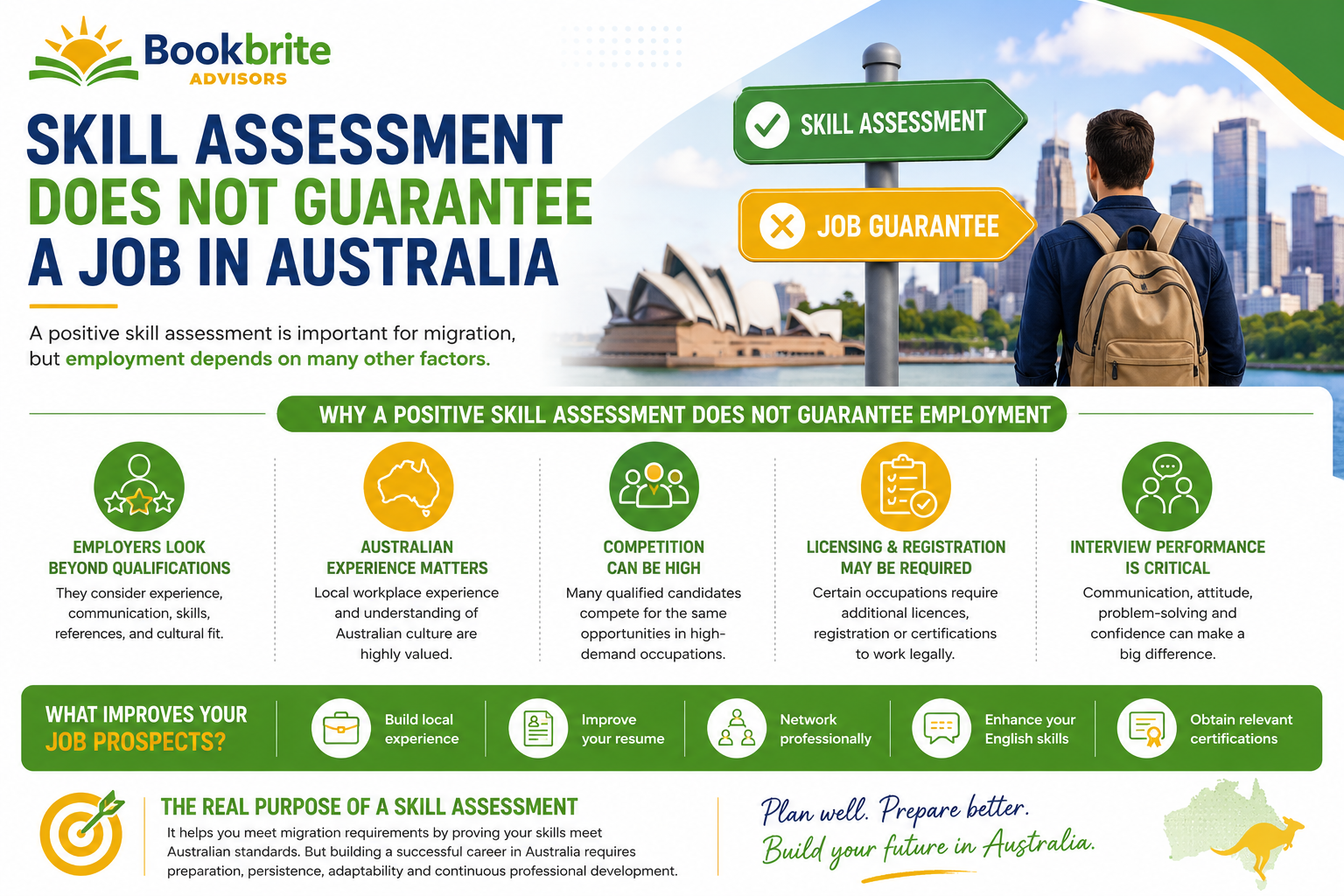
Many migrants and international students believe that obtaining a positive skill assessment automatically leads to employment in Australia. While a skill assessment is an important milestone in the migration process, it is not a guarantee of a job offer.
Understanding the difference between migration eligibility and employability can help applicants set realistic expectations and prepare effectively for the Australian job market.
What is a Skill Assessment?
A skill assessment is an evaluation conducted by an authorised assessing body to determine whether your qualifications and work experience meet Australian standards for a nominated occupation.
Depending on your profession, assessments may be conducted by organisations such as:
- Engineers Australia
- VETASSESS
- Trades Recognition Australia
- Australian Computer Society
A positive outcome confirms that your skills are considered comparable to Australian requirements for migration purposes.
However, this assessment is primarily designed for visa applications, not for employment decisions.
Why a Positive Skill Assessment Does Not Guarantee Employment
1. Employers Look Beyond Qualifications
Australian employers generally consider several factors when recruiting candidates, including:
- Relevant Australian work experience
- Communication and English language skills
- Industry-specific knowledge
- Professional references
- Cultural fit within the organisation
- Technical and practical skills
Having a positive skill assessment only demonstrates that you meet minimum occupational standards. It does not prove your suitability for a specific role.
2. Australian Experience Matters
Many employers prefer candidates who have experience working in Australian workplaces.
Australian workplaces may have different:
- Safety standards
- Workplace culture
- Communication styles
- Industry regulations
- Client expectations
Even highly qualified overseas professionals may need time to adapt to local practices.
3. Competition Can Be High
Certain occupations attract a large number of applicants.
For example, accountants, business professionals, IT specialists, and engineers often compete against both local and international candidates.
A positive skill assessment may make you eligible for migration pathways, but employers still compare your application against other candidates.
4. Licensing and Registration Requirements
Some occupations require additional registration before you can legally work.
Examples include:
- Nurses
- Teachers
- Electricians
- Plumbers
- Medical practitioners
Even with a positive skill assessment, you may still need to obtain professional registration, licences, or certifications before commencing employment.
5. Interview Performance is Critical
Many candidates focus heavily on obtaining a skill assessment and visa approval but overlook interview preparation.
Australian employers often place significant emphasis on:
- Communication skills
- Problem-solving ability
- Teamwork examples
- Professional attitude
- Understanding of the role
Strong interview performance can often be the deciding factor between candidates with similar qualifications.
What Actually Improves Your Job Prospects?
Build Local Experience
Consider:
- Internships
- Volunteering
- Contract work
- Casual employment
- Professional placements
Local experience helps employers gain confidence in your ability to work in Australia.
Improve Your Resume
Australian resumes differ from those used in many other countries.
Your resume should be:
- Clear and concise
- Achievement-focused
- Tailored to the specific role
- Free from unnecessary personal information
Network Professionally
Many jobs are filled through referrals and professional connections.
Attend:
- Industry events
- Professional association meetings
- Networking sessions
- Career expos
Building relationships can often create opportunities that are not publicly advertised.
Enhance Your English Communication Skills
Strong communication skills are essential in most Australian workplaces.
Employers value candidates who can confidently communicate with:
- Clients
- Colleagues
- Managers
- Stakeholders
Obtain Relevant Certifications
Additional Australian certifications can improve employability.
Examples include:
- White Card
- Responsible Service of Alcohol (RSA)
- First Aid Certification
- Industry-specific training programs
The Real Purpose of a Skill Assessment
A skill assessment should be viewed as one step in your migration and career journey.
It helps demonstrate that your qualifications and experience meet Australian standards, which is often required for visa applications. However, employment success depends on many additional factors including skills, experience, networking, communication, and job search strategy.
Final Thoughts
A positive skill assessment is an excellent achievement and an important requirement for many Australian visa pathways. However, it should not be viewed as a guaranteed pathway to employment.
Success in the Australian job market requires preparation, persistence, adaptability, and continuous professional development.
If you are planning to migrate to Australia, focus not only on obtaining a positive skill assessment but also on developing the skills and experience that Australian employers genuinely value.
At Bookbrite Study Abroad Advisers, we help clients understand both the migration process and the realities of building a successful career in Australia. Proper planning and realistic expectations can significantly improve your chances of long-term success.